"If the dead are good for anything, it is
to fertilise the living."
From a poem, 2021
2025-ongoing
From a poem, 2021
Mixed media artworks
Photographs
Claywork
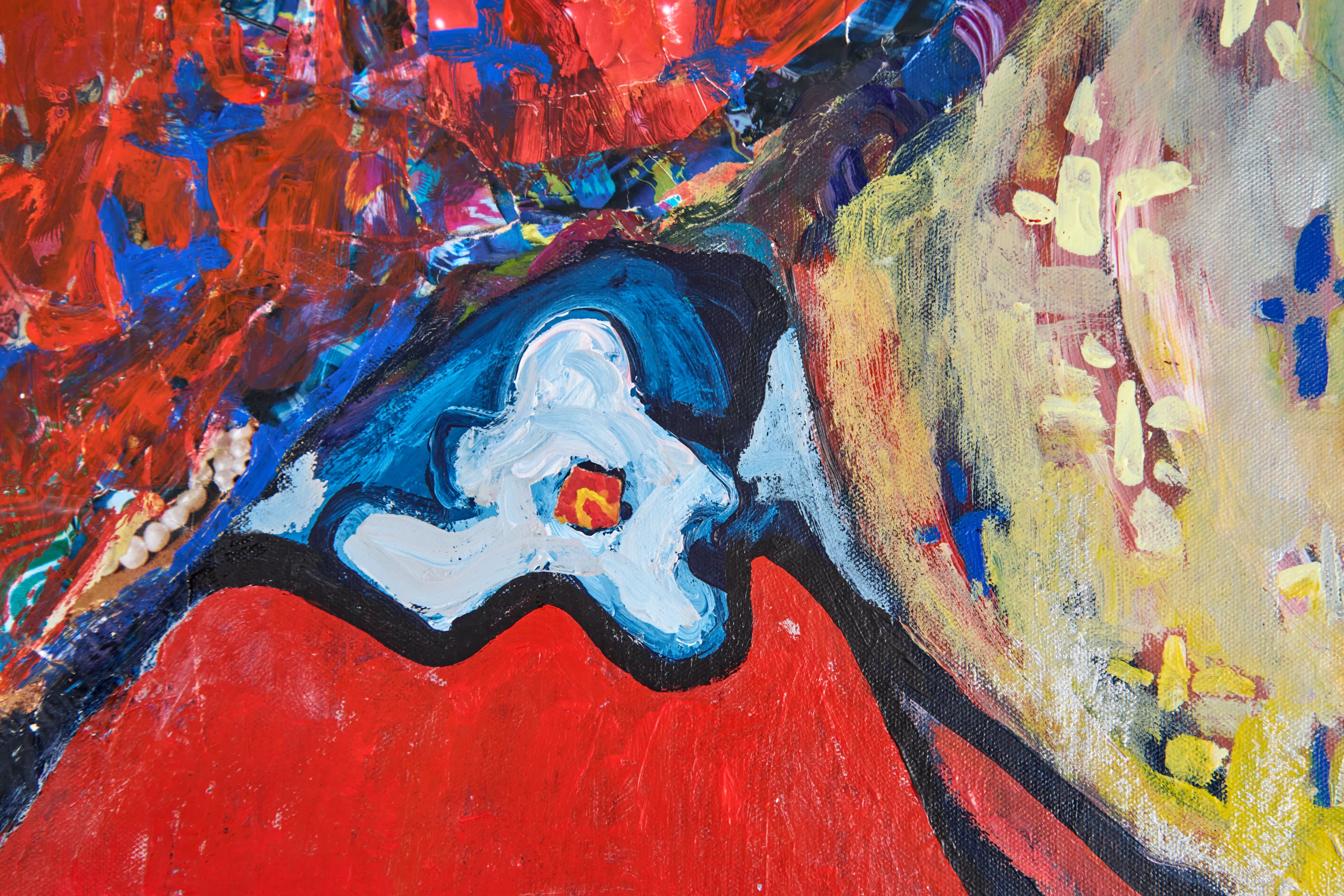
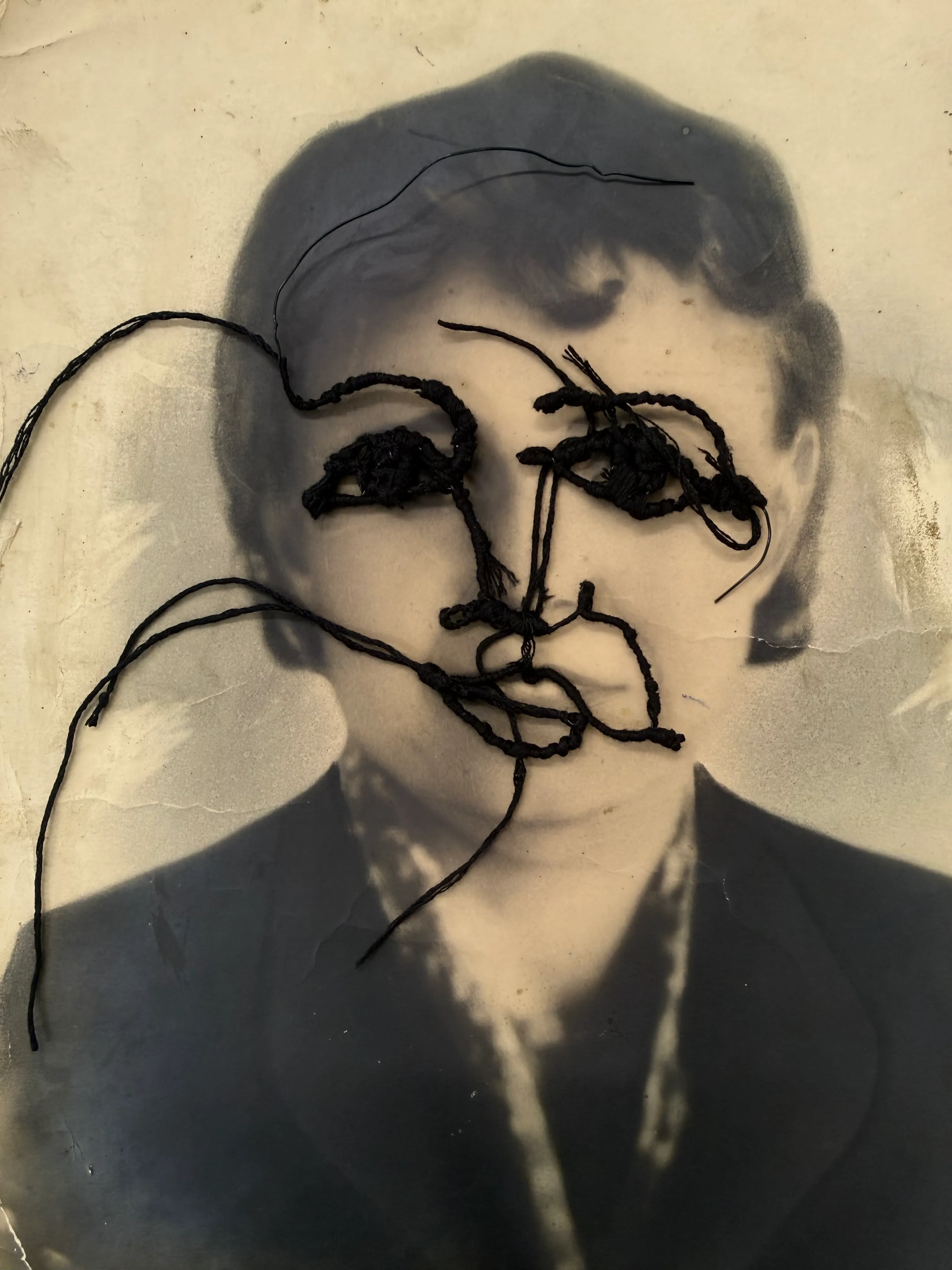
Inspired by a tin-glazed plate, inscribed "You and I / are Earth / 1661", as well as research into my own familial heritage, this ongoing project comprises of large scale mixed media canvas, photographs, and glazed clay work.
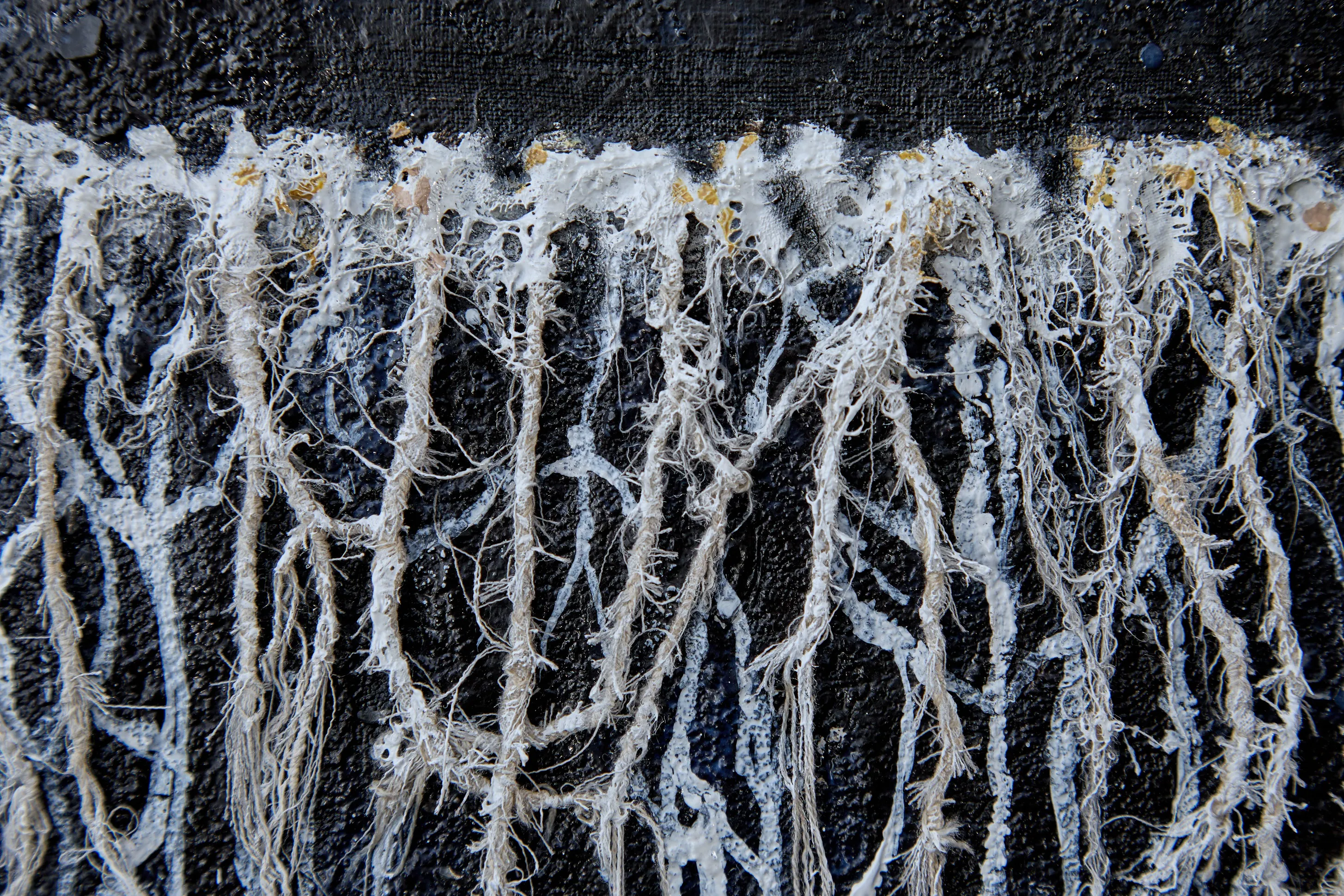
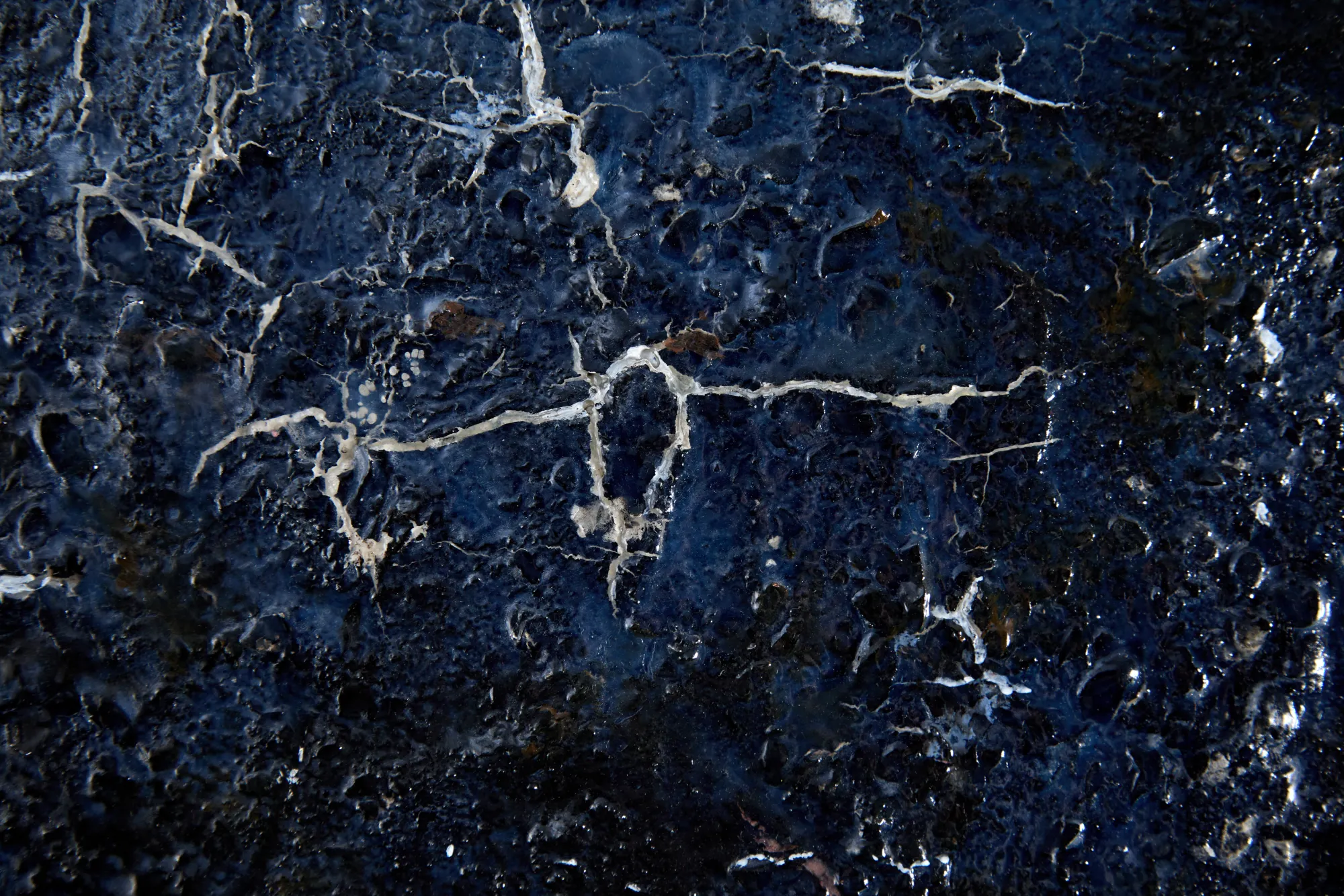
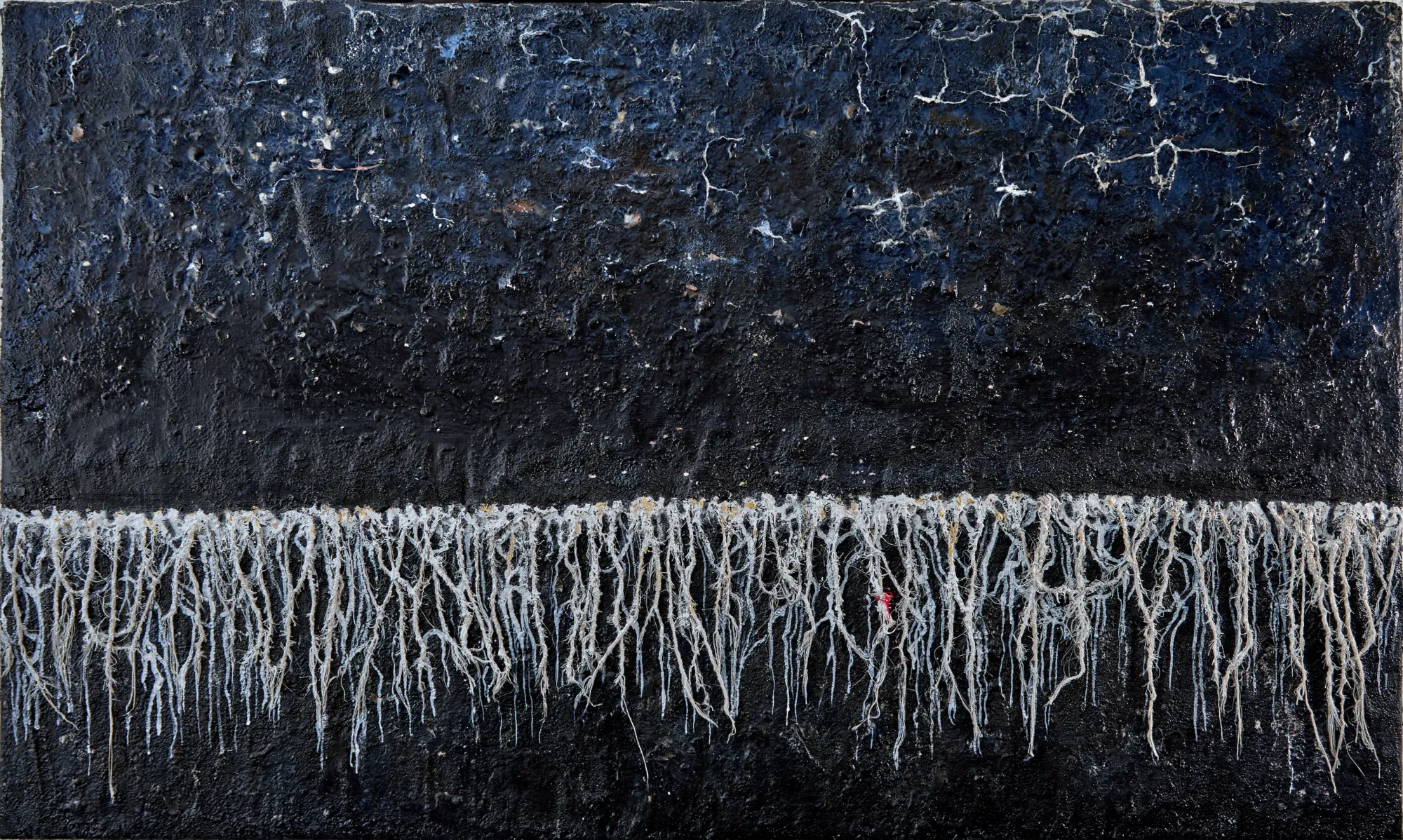
You and I are Earth (2025). In this centrepiece work, a dark, heavily worked surface evokes underground networks of grass, nerves, veins, or buried bodies. The work reflects on what exists beneath the systems of power and progress: the unnoticed lives that sustain the visible world while remaining unseen themselves.
The dense upper plane resembles asphalt, scorched soil, or poured cement — a surface that suppresses and conceals. Beneath it, pale threads persist in quiet resistance, recalling roots searching for water, human figures suspended in earth, or traces of soldiers and civilians absorbed into the landscape of history. The materials themselves carry a sense of erosion and endurance, binding organic fragility to industrial weight.
The title collapses the boundary between body and ground. you and I are earth suggests that what is buried is never fully erased: every life enters the soil, every act of violence settles into the land, every overlooked existence continues to hold the world together from underneath.
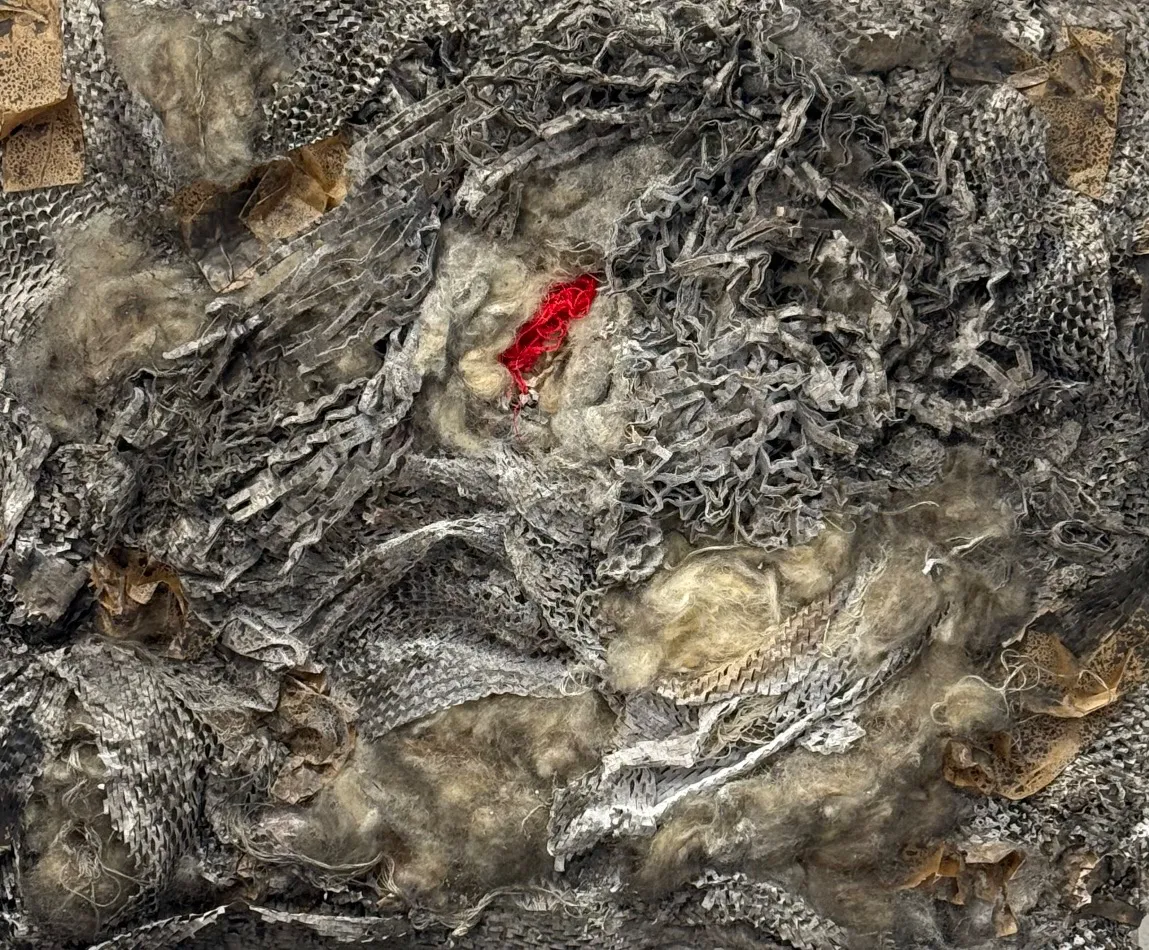
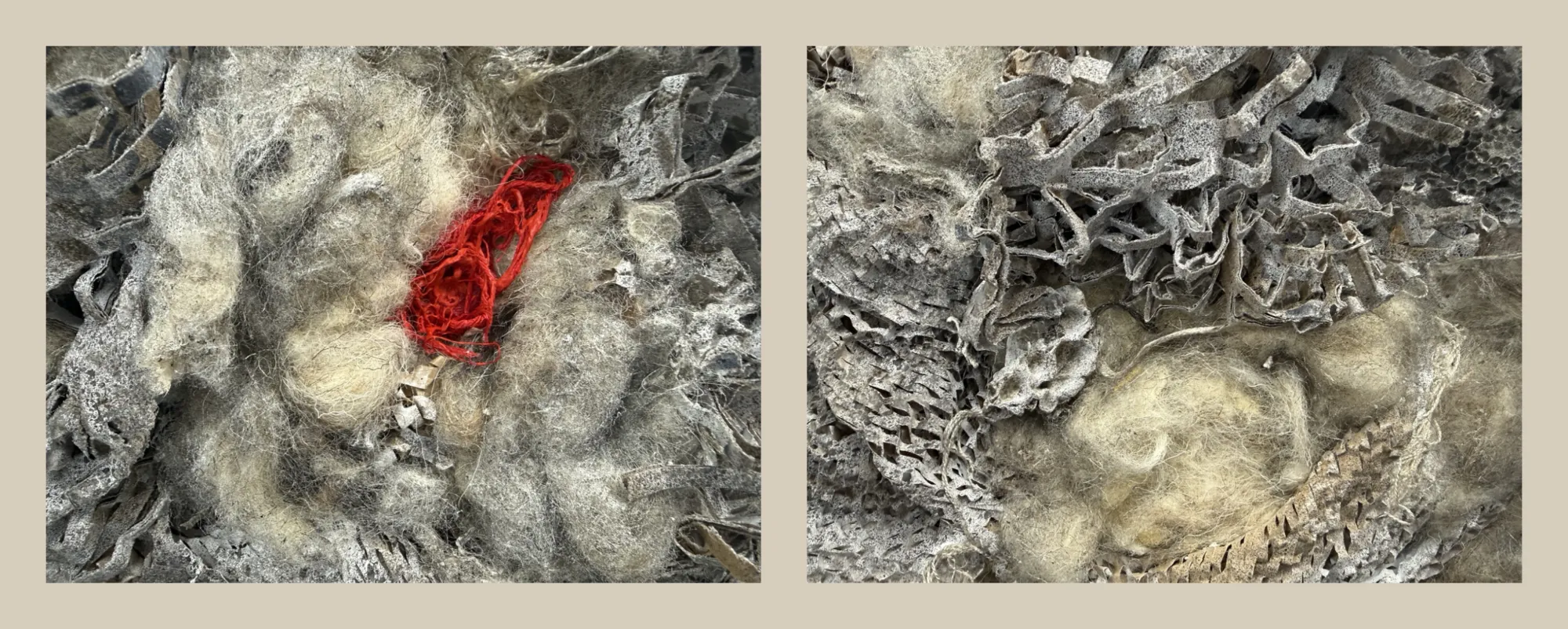
Wound (2026) gathers discarded packaging, industrial remnants, and organic materials collected in South Carolina — including fragments suggestive of coral reef structures, fibrous matter, and eroded textures shaped by coastal ecosystems. Suspended between sediment and debris, the work examines the collision of ecology and consumer culture: what is extracted, consumed, protected, and abandoned.
The surface oscillates between the marine and the synthetic. Corrugated plastics and disposable materials resemble bleached coral, scar tissue, or fossil remains, blurring distinctions between living systems and manufactured waste. At its center, a visceral red opening interrupts the muted palette like an exposed nerve or ruptured organ — a reminder that environmental damage is neither abstract nor distant, but bodily.
Rather than presenting nature and consumerism as opposites, Wound reveals how thoroughly they have fused. The work asks what kinds of landscapes we are leaving behind, and whether the contemporary shoreline has become an archive of both ecological fragility and human excess.