dream series
2012-ongoing
Collaged works
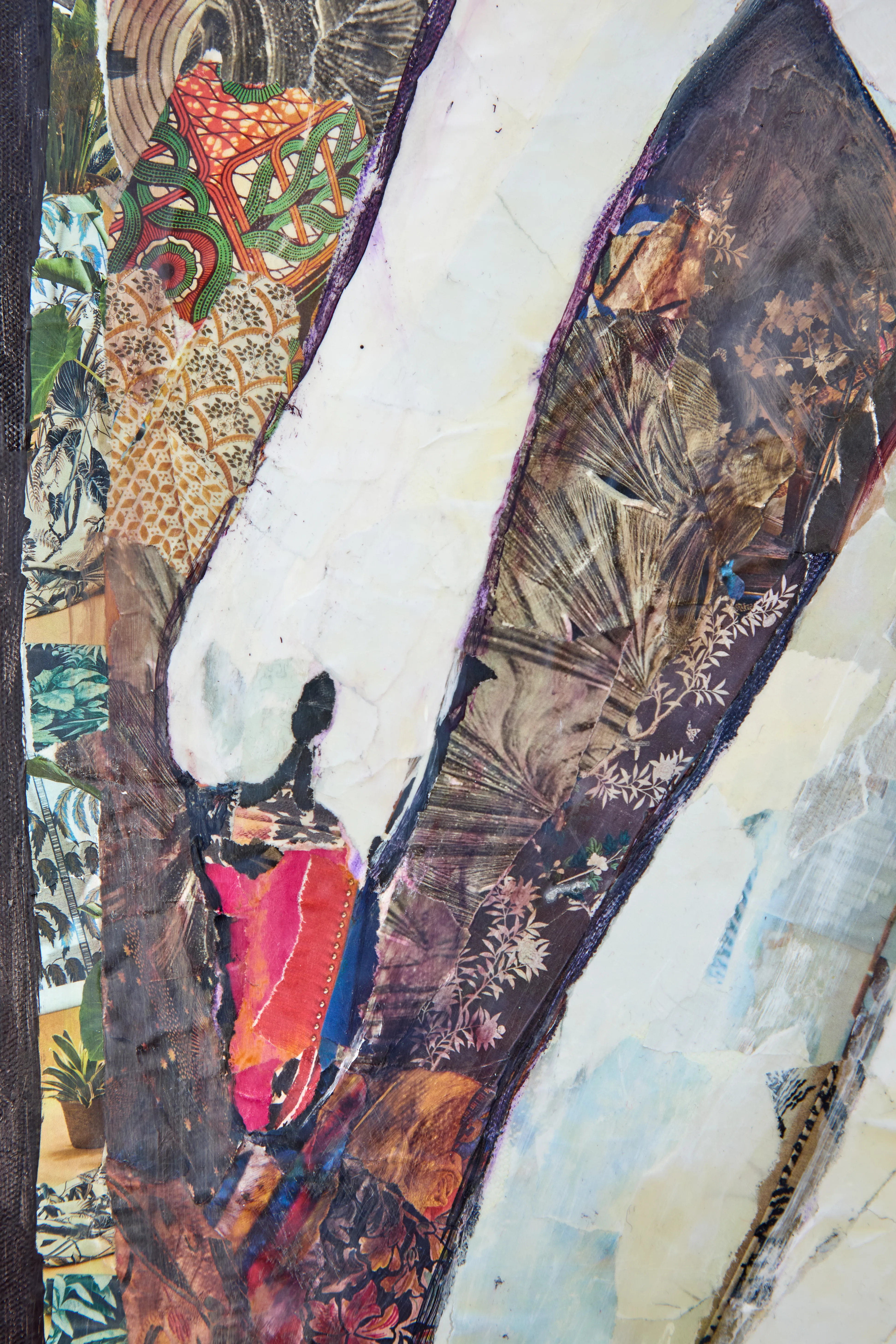
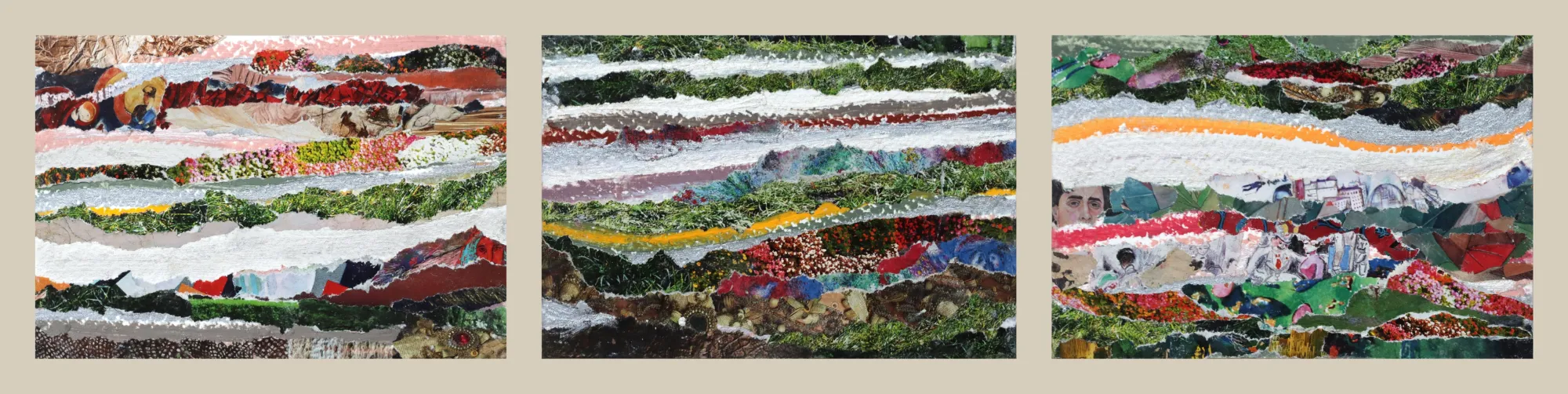
This ongoing body of work began in 2012 with a small series of collage postcards titled Chagall’s Dreams. Intimate in scale and assembled from fragments of printed matter, fabric, packaging, found images, and handwritten traces, the postcards became a way of mapping emotional and psychological landscapes through juxtaposition and accumulation.
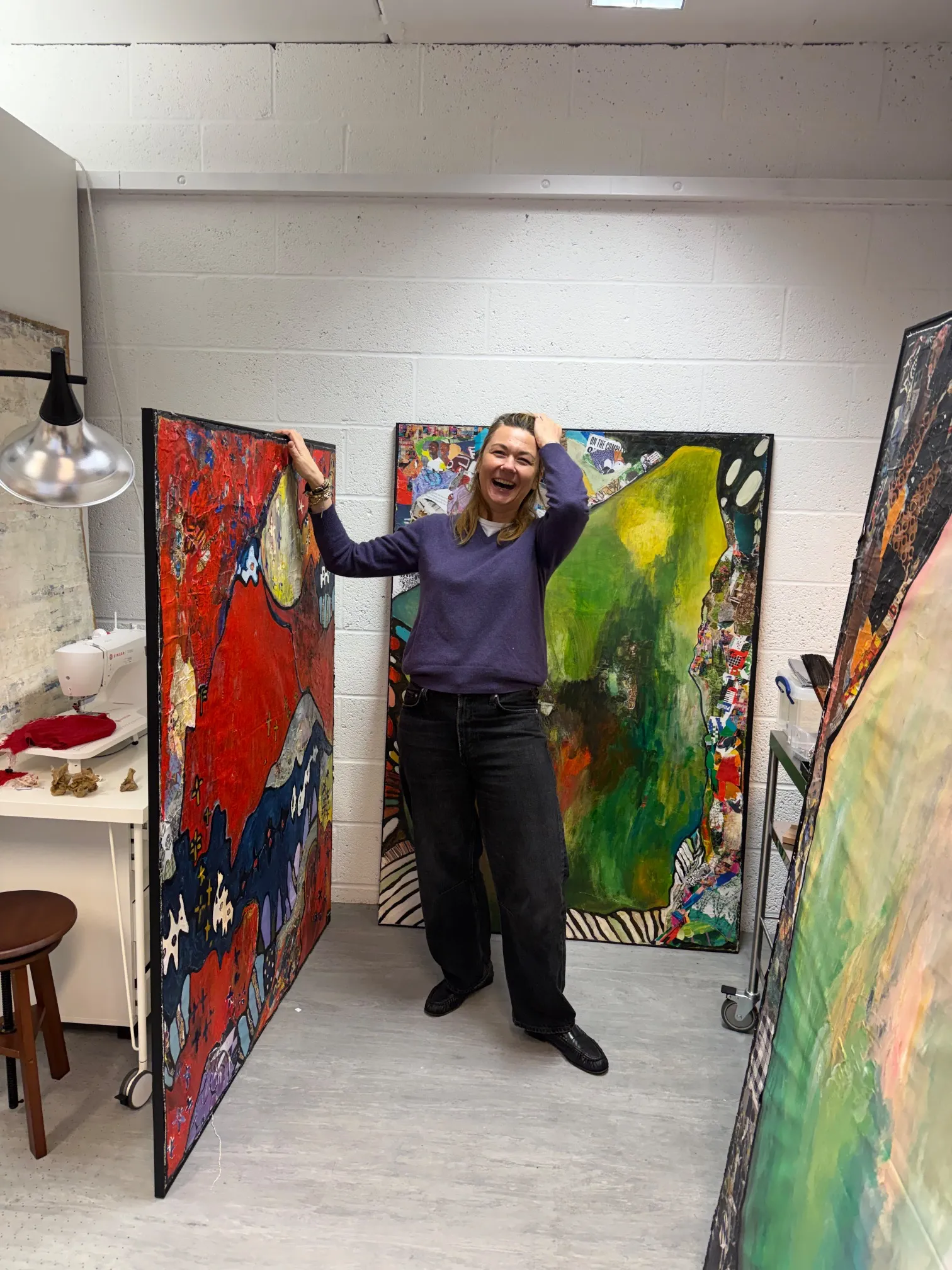
Over time, the project expanded into large-scale canvases and drawings, where collage developed into a more architectural visual language — grids, ruptures, colour fields, and layered surfaces existing in tension with one another.
"One's truth can be reached through dream and memory."
— Marc Chagall
selected works from the series:
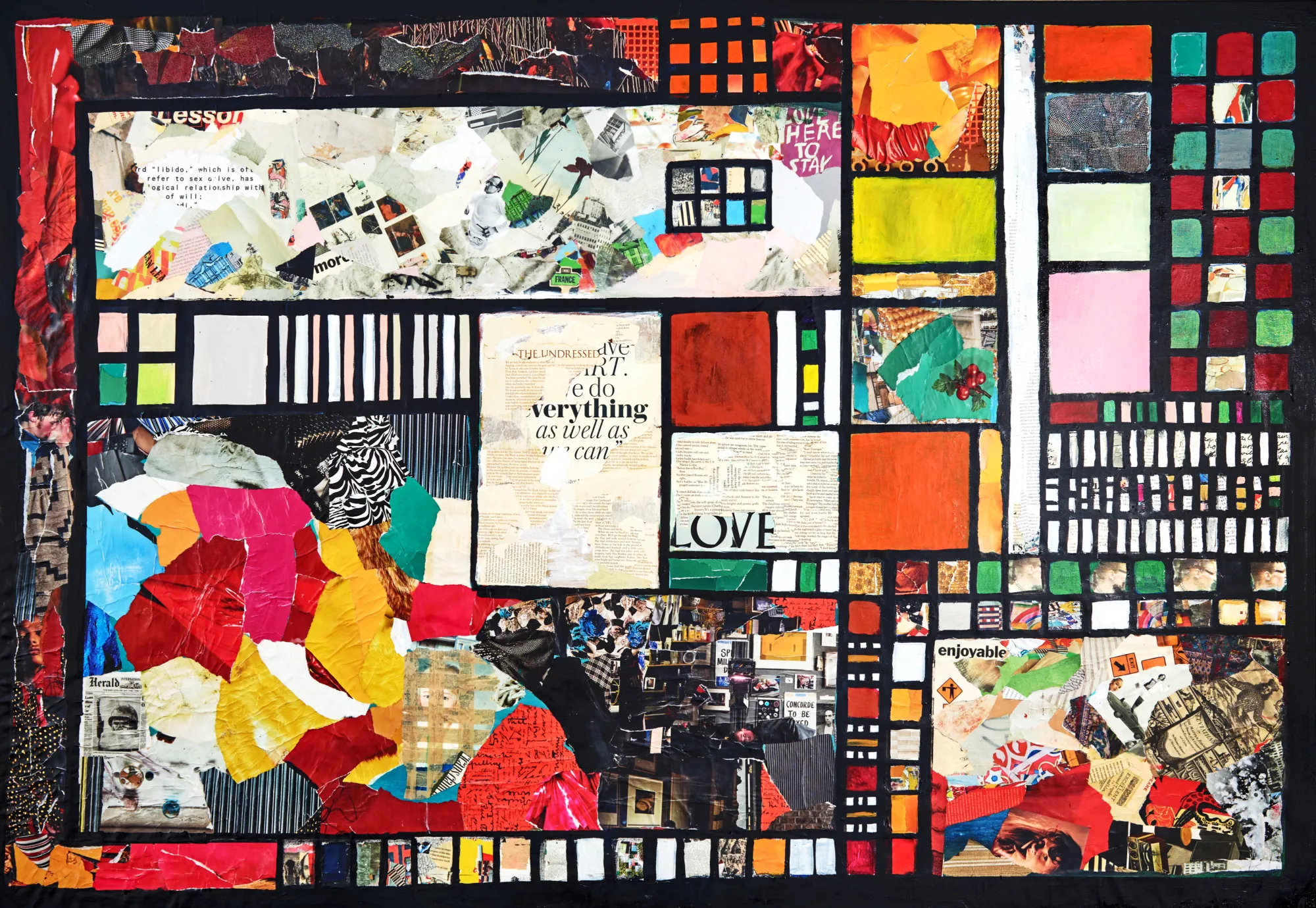
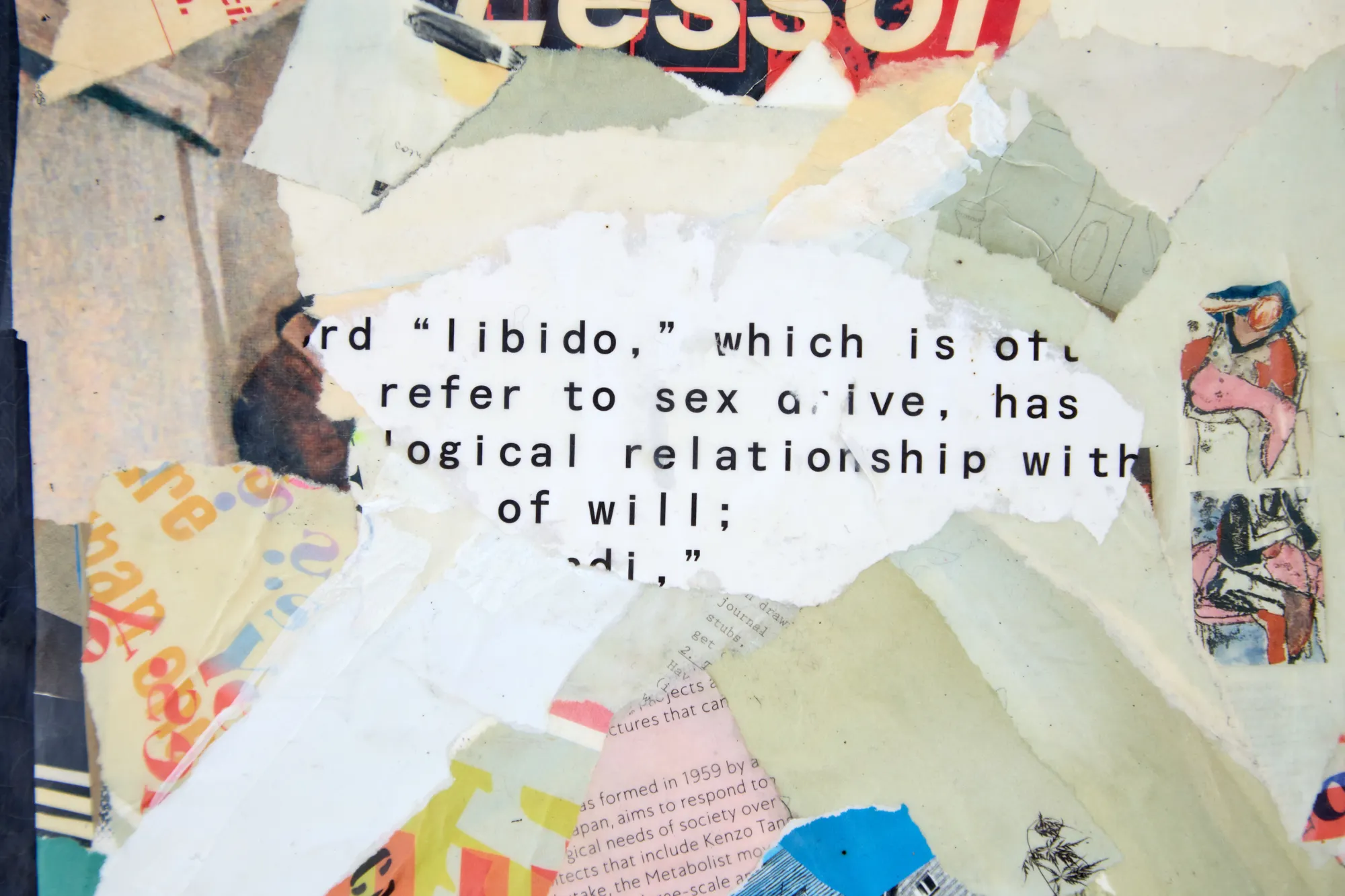
Dream Motel (2023). Drawing on traditions of modernist abstraction, assemblage, and the poetics of the archive, the works reflect both an inner state and the historical atmosphere surrounding it. Personal memory intersects with displacement, consumer culture, political unease, and the overstimulation of contemporary life. Fragments of text appear and disappear; domestic materials coexist with painterly gestures; order repeatedly breaks down into excess and reconstruction.
The recurring grid functions simultaneously as structure and containment — echoing windows, city plans, digital interfaces, or systems of control — while the torn and tactile surfaces resist permanence and coherence. Across the series, collage becomes not only a method of composition, but a form of survival: a way of holding contradiction, intimacy, noise, grief, beauty, and historical pressure within the same visual field.
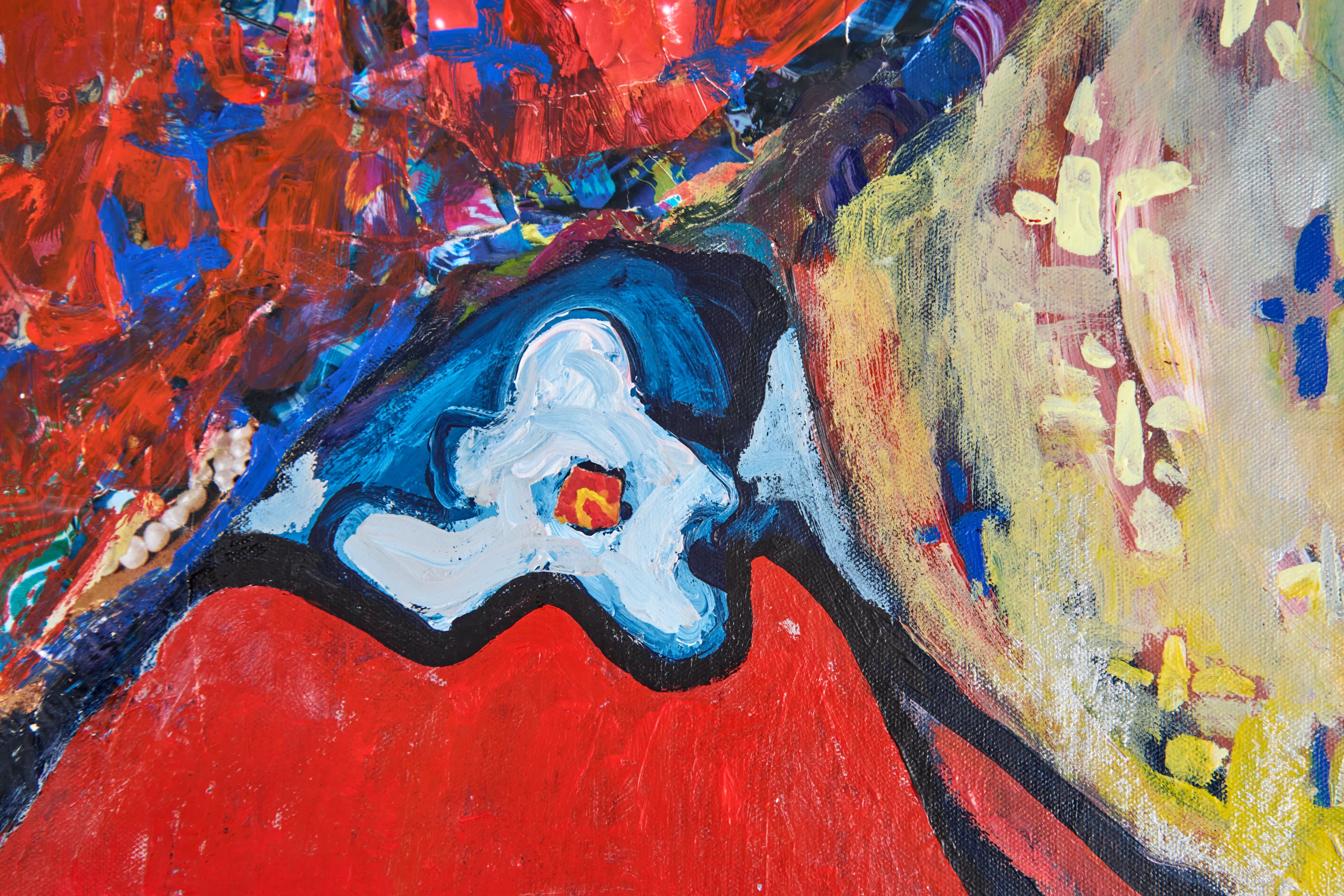
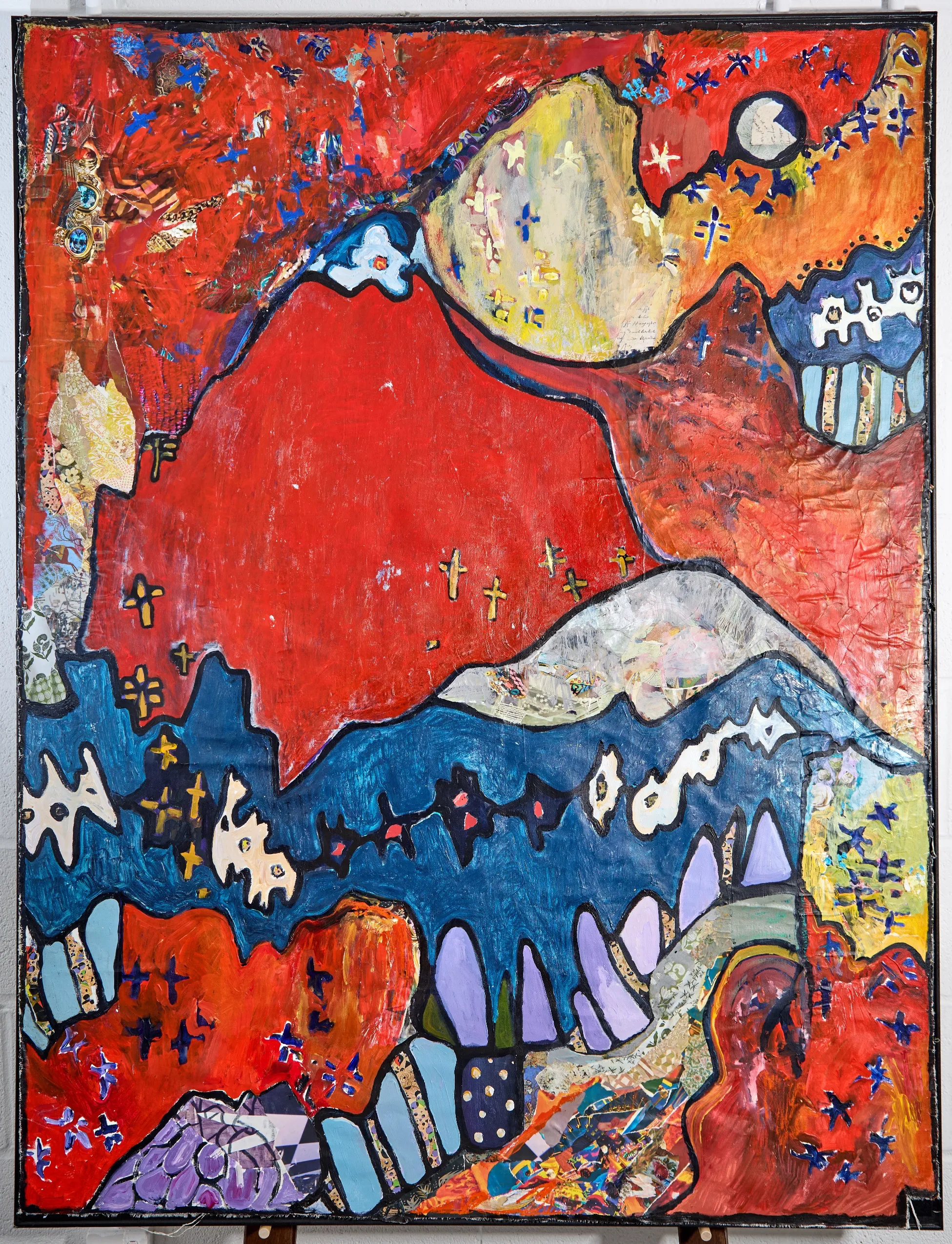
No End in Sight (2022) confronts the viewer with a fractured visual terrain where colour, texture and layered collage converge into a restless, overwhelming whole. There is no horizon, no resolution, no place for the eye to rest.
Scattered across the red field, small golden crosses drift like seeds or wounds — at once grave markers and sacred symbols, casualties counted, and faith tested. They do not explain themselves. Embedded throughout the composition, collaged fragments surface and disappear: jewellery, icons, horses, ornamental patterns, the residue of cultures that existed before our time and will exist after we are long gone. These details remind us that war does not erase the world that preceded it; it disrupts it, forces it into new and violent proximity. The blue heraldic form on the right of the work — part shield, part vessel, part unknowable symbol — sits ringed in orange fire, holding its shape against the chaos around it.
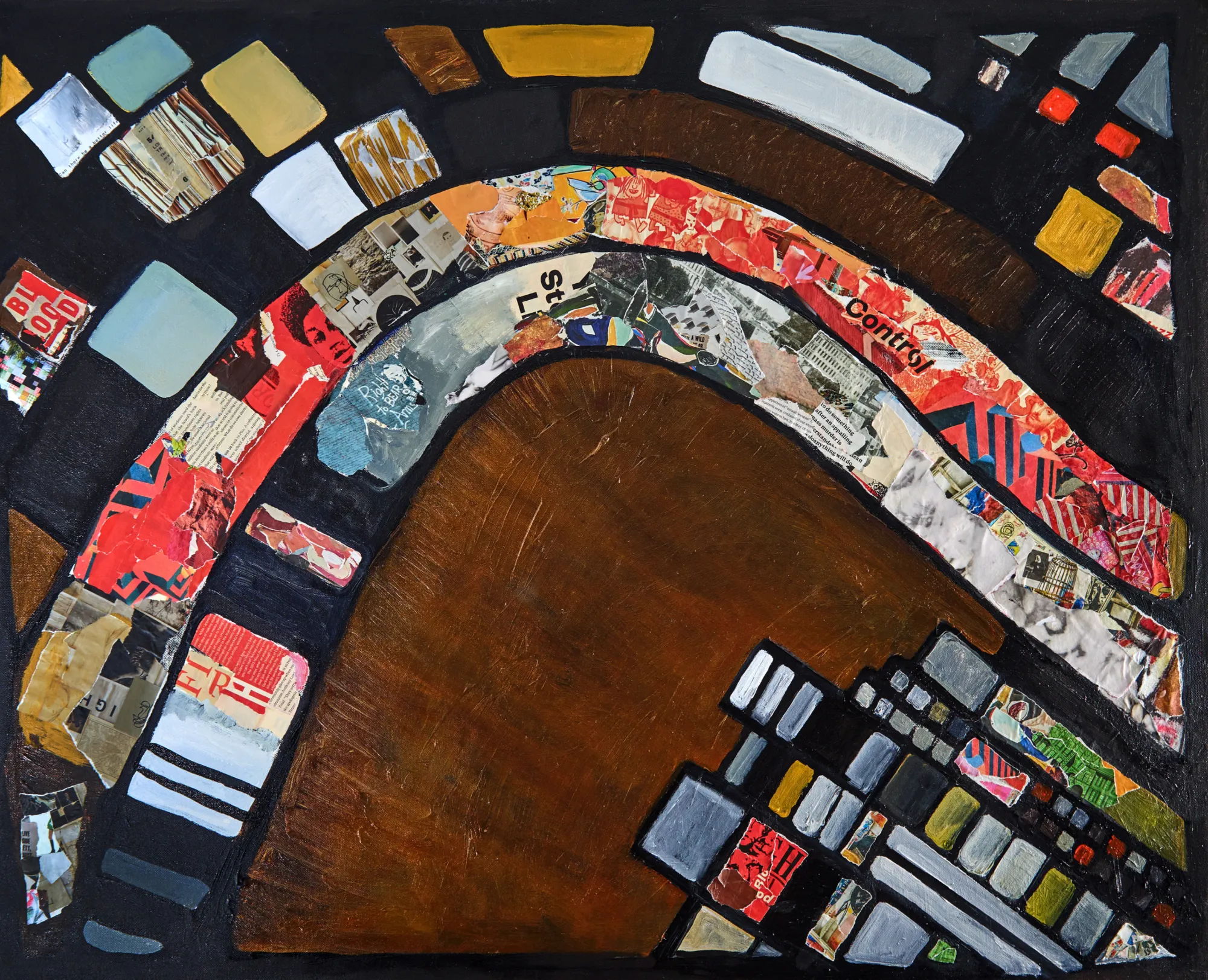
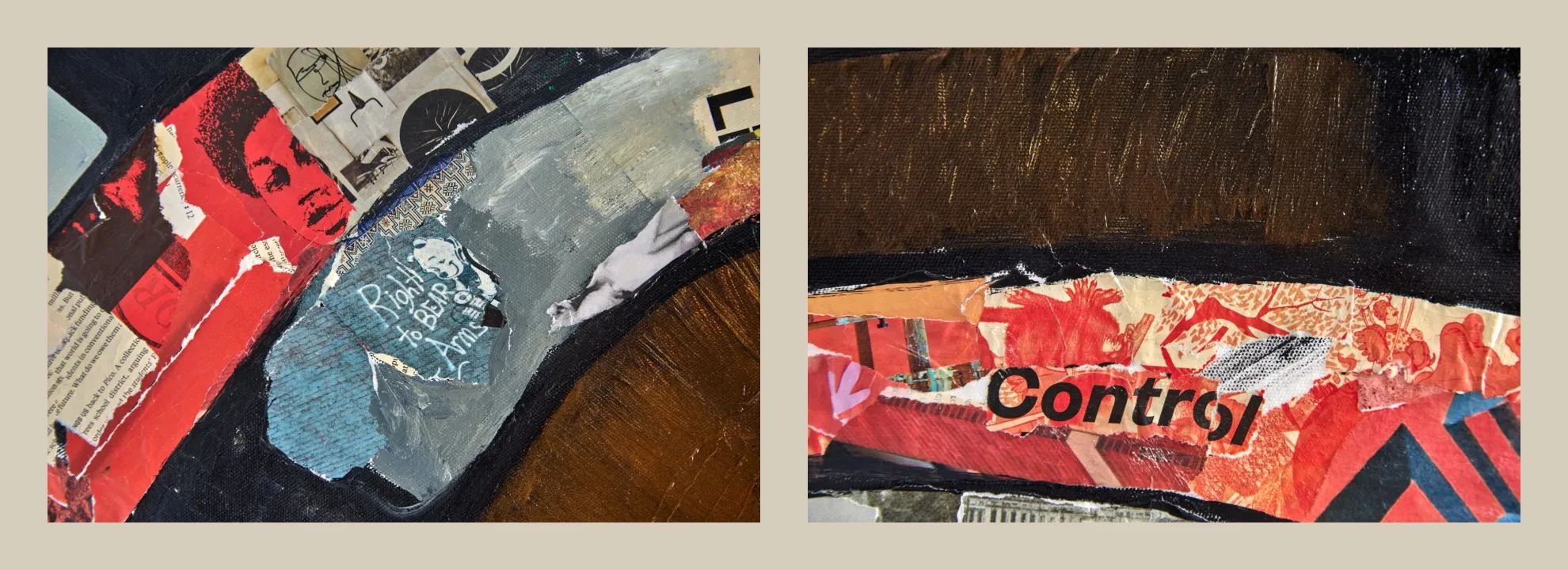
The Right to Bare Arms (2023). This is a dense, formally arresting work built around a single dominant arch — a curved form that rises from the bottom of the canvas and hangs against a deep dark ground like a rainbow, an archway, or the silhouette of a journey half-completed. The arch is both structure and subject: it frames an empty interior of warm, burnished brown, a space held open and waiting, while its curved band is packed with collaged fragments torn from newspapers, magazines and printed ephemera. To move along this arch is to move through a torrent of American life — protest imagery, headlines, the word "Control" surfacing in bold type, a graffitied "Right to Bear Arms," red-printed figures of hunters and animals, faces rendered in red and black, city streets, text fragments that circle questions of race, rights and power. Nothing is resolved. Everything presses against everything else.
The work was made during the period I lived in the US, as we briefly moved from South Carolina to Atlanta. It carries that in-between quality, the particular alertness of someone crossing a threshold and looking hard at what surrounds them. Considering I was born in Belarus, my encounter with the American South presented different but deeply familiar language of power, silencing and resistance.
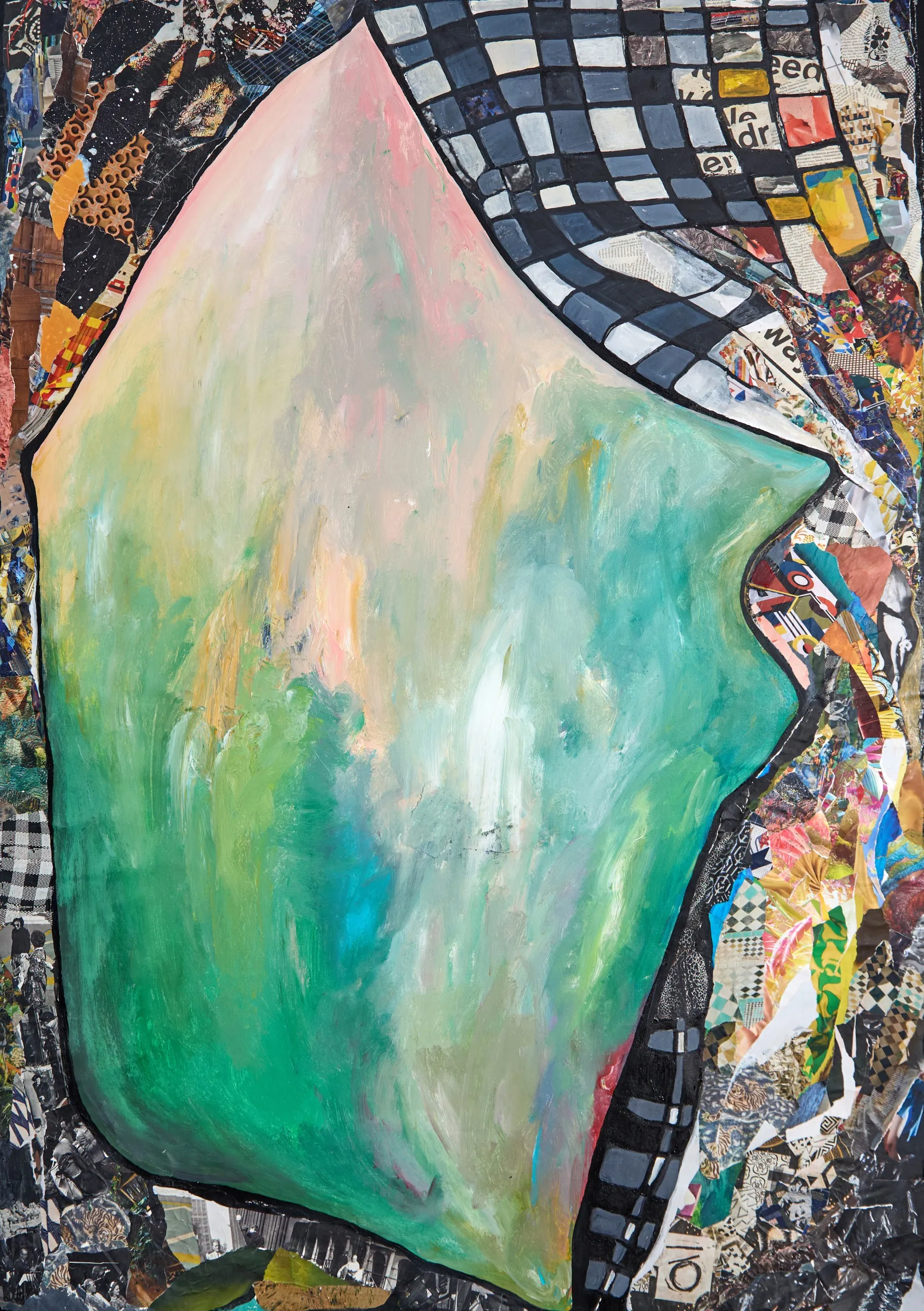
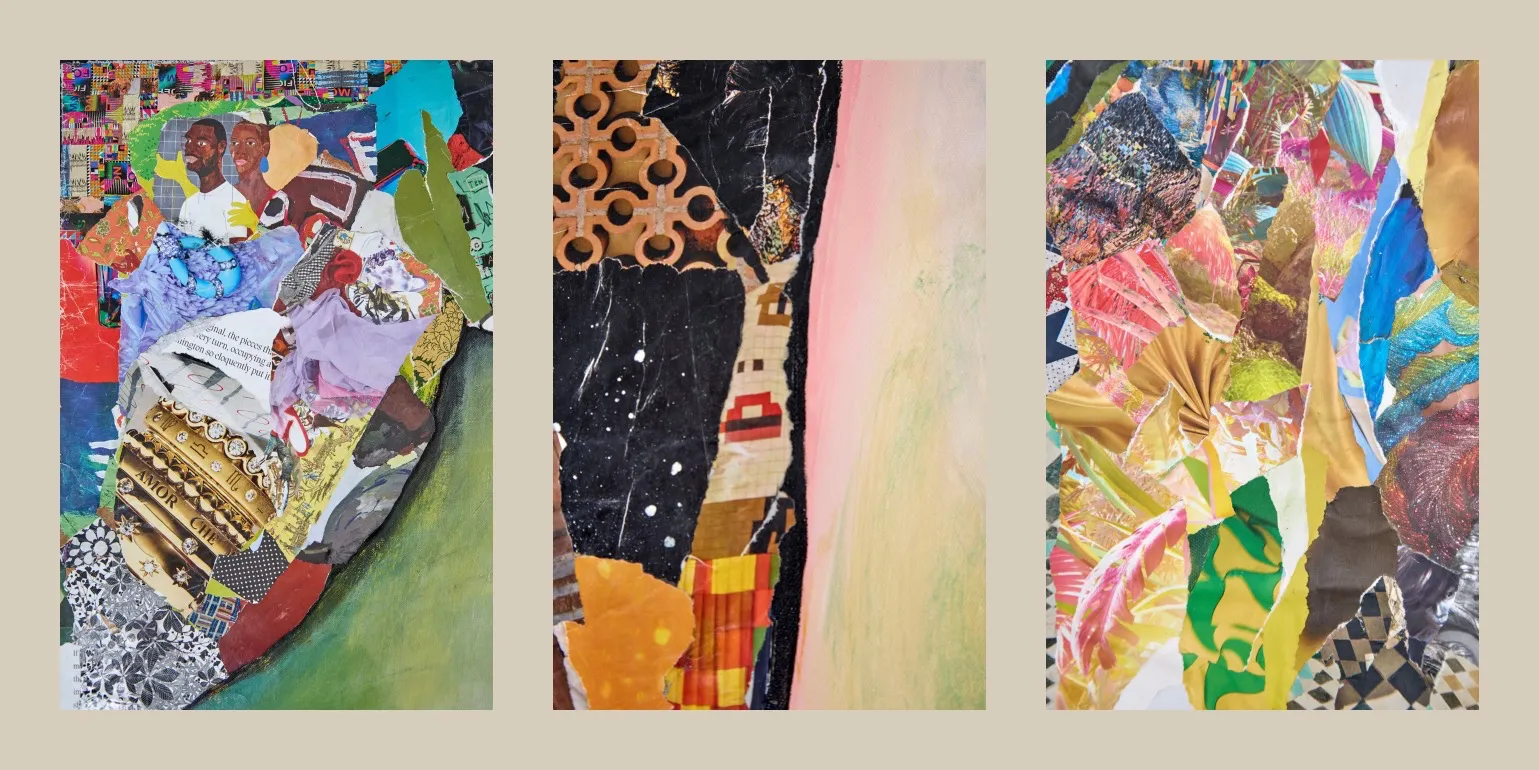
Letting Go (2023) is a sprawling, animated and quietly unsettling mixed media work that operates simultaneously on the surface and beneath it. At first the canvas engulfs the viewer with colour and abundance — a dense border of collage frames an infinite painted interior, the whole composition buzzing with the energy of accumulated imagery. Torn fragments of magazine pages, protest photographs, printed text, patterned textiles, portraits, jewellery advertisements and African print fabrics press against one another along the painting's edges, each piece carrying its own world. Glimpsed within this border are fragments of language — headlines, narratives, slogans — that surface and disappear like half-remembered thoughts. The collage does not illustrate; it accumulates, the way the mind accumulates experience, without hierarchy or resolution.
At the centre of the work, the painted surface opens into something altogether different: a broad, atmospheric field of greens, yellows and deep ochres, loosely gestural, almost landscape-like. And here, barely visible, half-submerged in layers of paint as if seen through fog or the membrane of sleep, are wolves. They do not announce themselves. They must be found. Their presence is felt before it is seen — a shift in the quality of the green, a darkening, a sense that something moves within the field. The wolves belong simultaneously to the dream world and the waking one: they are the subconscious made visible, the predatory forces that circle at the edges of safety, the political threat that does not always show its face. That they emerge from beneath the surface — painted over, painted through — speaks to the work's central tension: the bright, chaotic abundance of the collaged world pressing up against the older, darker knowledge that runs underneath it.
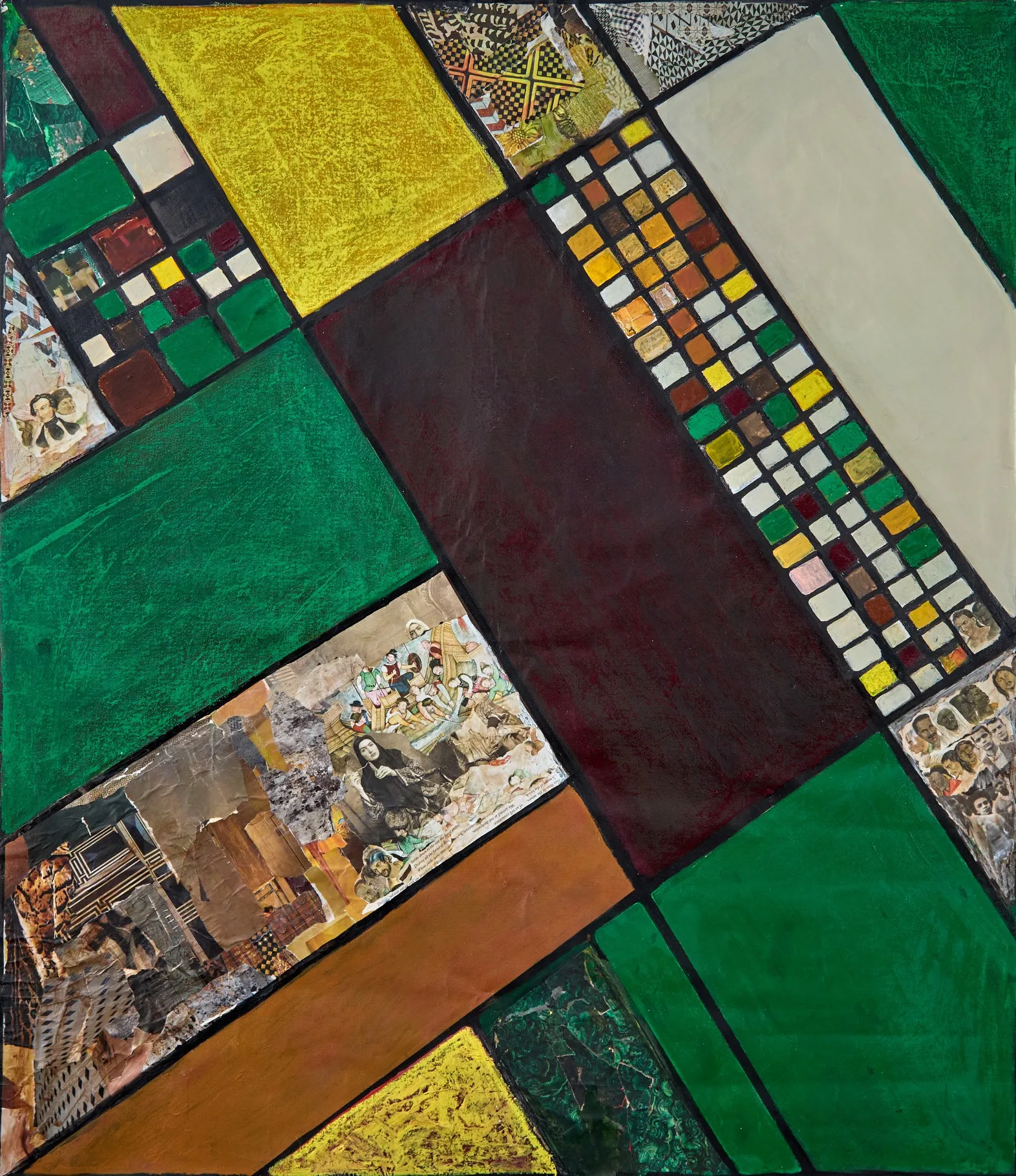
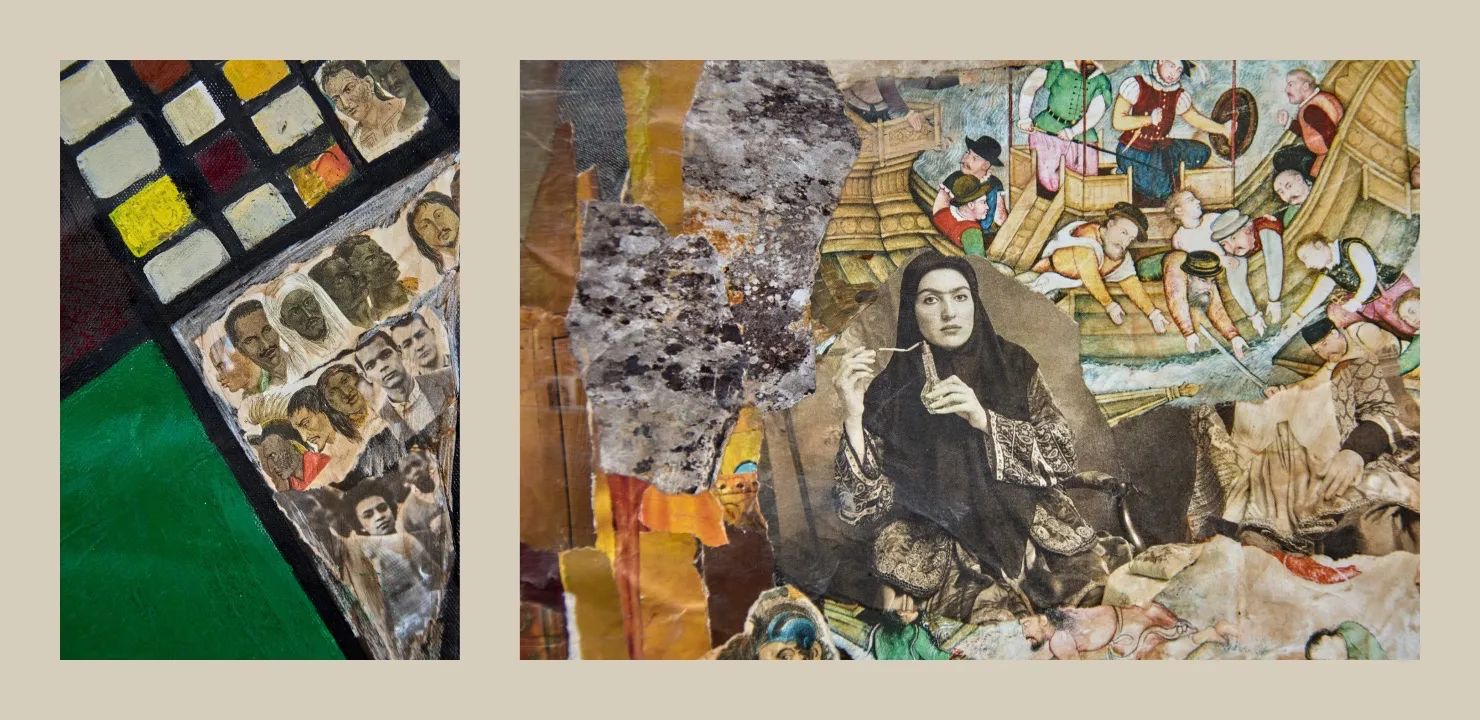
Greener Grass (2024) reflects on migration, inheritance, and the repeating cycles of displacement that shape generations of families seeking safety, dignity, or the possibility of a better life. Structured through an abstract grid of intersecting planes, the work combines painting and collage to evoke fragmented geographies, borders, city maps, domestic interiors, and systems of passage.
Throughout the composition, richly coloured fields are interrupted by archival fragments, miniature faces, historical imagery, and decorative patterns that appear embedded within the structure like memories carried across borders. The recurring green surfaces suggest both literal landscapes and the enduring fantasy of “greener grass” elsewhere — the belief that another country, language, or future might offer greater freedom or belonging. Yet the work also reflects the emotional cost of that movement: rupture from home, cultural estrangement, and the quiet sacrifices made by parents who accept isolation or invisibility so that their children may become legible within a new society.
The rigid geometry of the painting contrasts with the instability of its materials. Torn fragments resist seamless integration, mirroring the migrant experience itself: lives reconstructed from partial histories, layered identities, and interrupted continuities. Across the work, belonging remains provisional and complex. One generation carries dislocation so that the next might inhabit possibility more freely.
Rather than presenting migration as a singular event, Greener Grass approaches it as an ongoing psychological and historical condition — a movement between loss and aspiration, exile and reinvention, memory and adaptation.
Next project
beautiful prisoners and other winged creatures