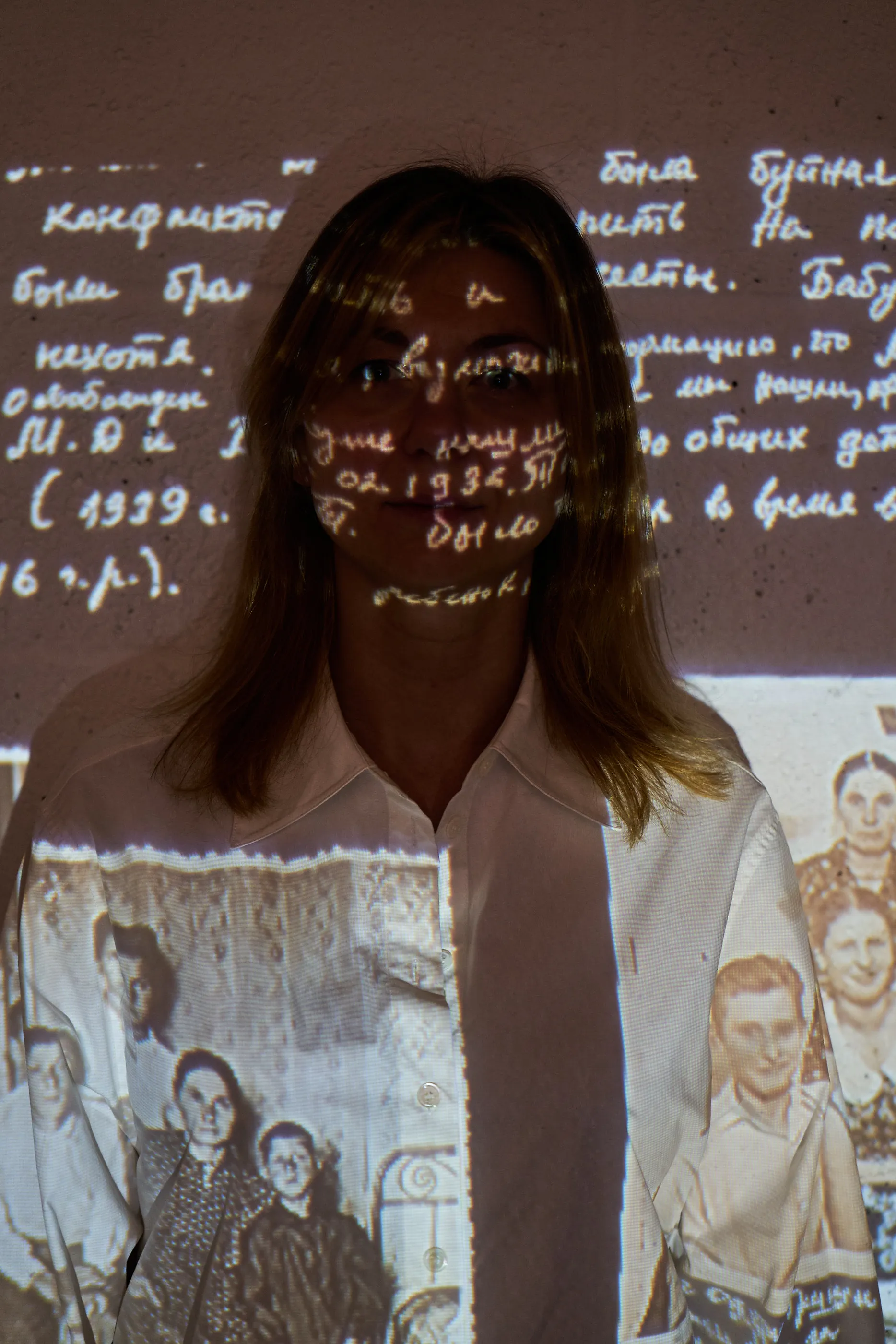
beautiful prisoners and other winged creatures
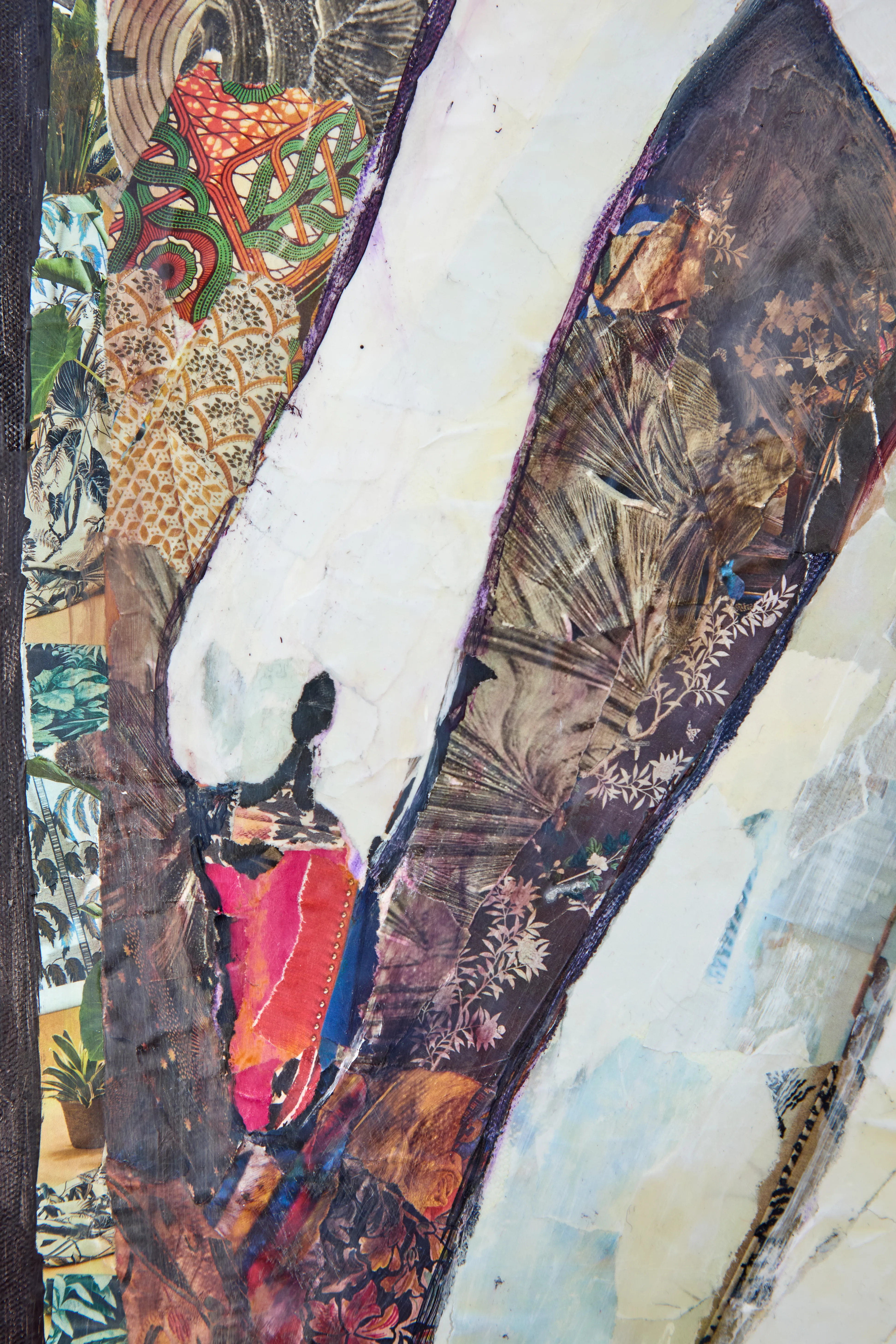
2020-ongoing
Collage and acrylic on cavas
Oil on canvas
I have always been drawn to birds. My first blog, in Russian, was called A Migrating Bird. Tsvetaeva's quote opened my first poetry collection with the title that translates as Notes in Travel.
Can art help us regenerate and heal? Collage teaches us that it can. Through finding meaning and harmony in re-fragmentation.
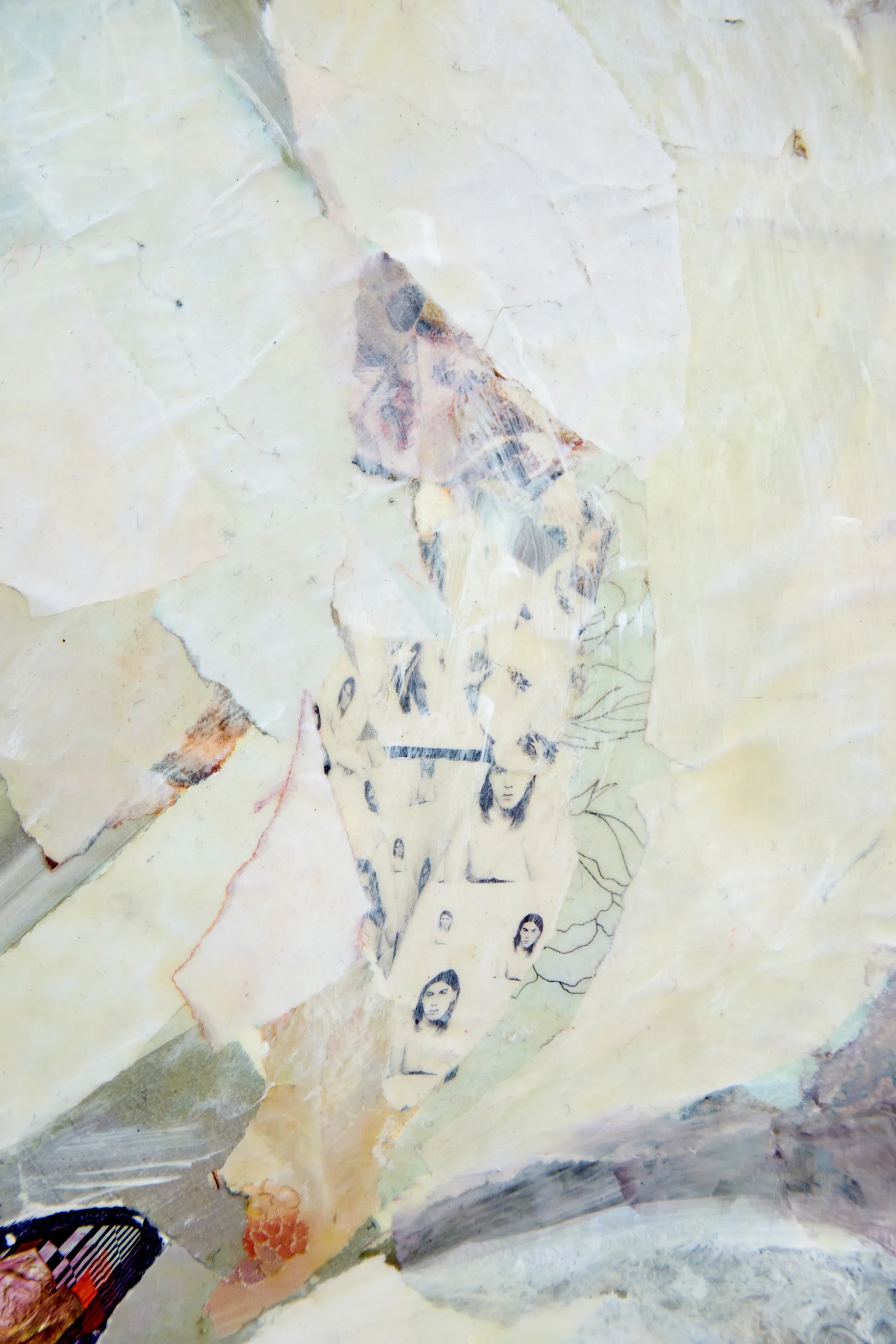
SELECTED WORKS FROM THE SERIES:
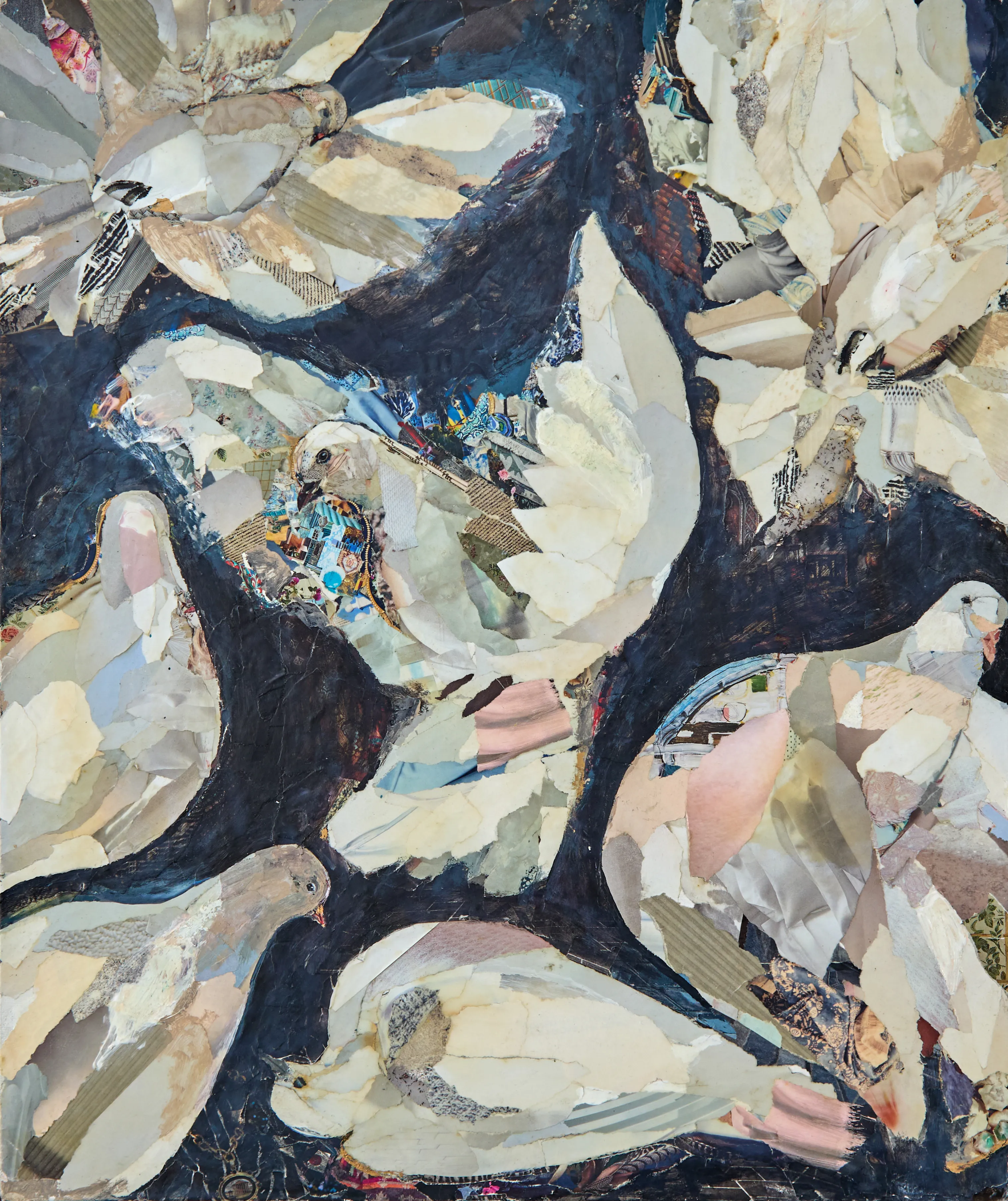
Beautiful Prisoners (2020)
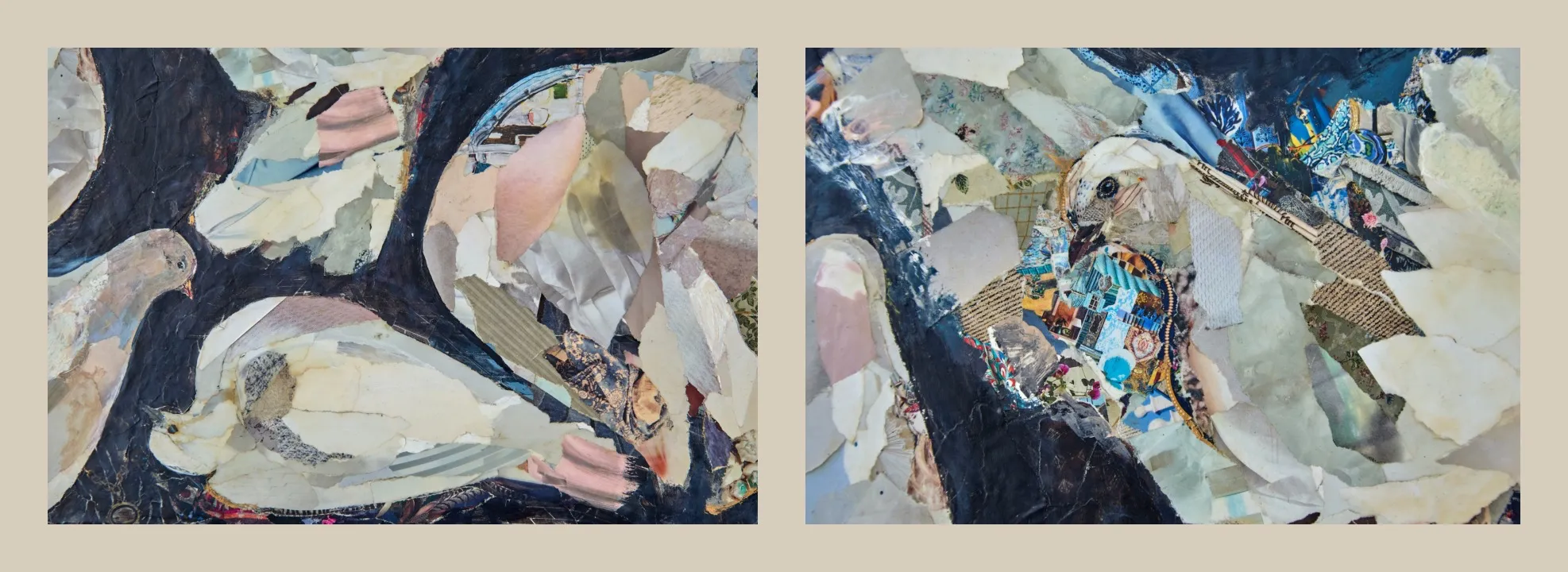
White doves emerge from and dissolve into a dense network of dark forms and fractured surfaces. Their bodies appear unfinished, partially obscured, as though caught between disappearance and survival. The composition resists fixed boundaries: figures overlap, merge, and crowd one another, evoking both confinement and collective endurance. The dark branching structures cutting through the work suggest prison bars, fractures, or systems of control pressing against fragile organic life.
Collage becomes both material and metaphor. Torn fragments are held together precariously, carrying traces of rupture, censorship, memory, and repair. The delicate surfaces and muted palette create an atmosphere of suspended silence, reflecting the psychological reality of fear, isolation, and uncertainty experienced under political repression. Yet the birds continue to move through the composition, insisting on tenderness, imagination, and the possibility of spiritual resistance even within conditions designed to erase individuality.
Unequal Battle (2023)
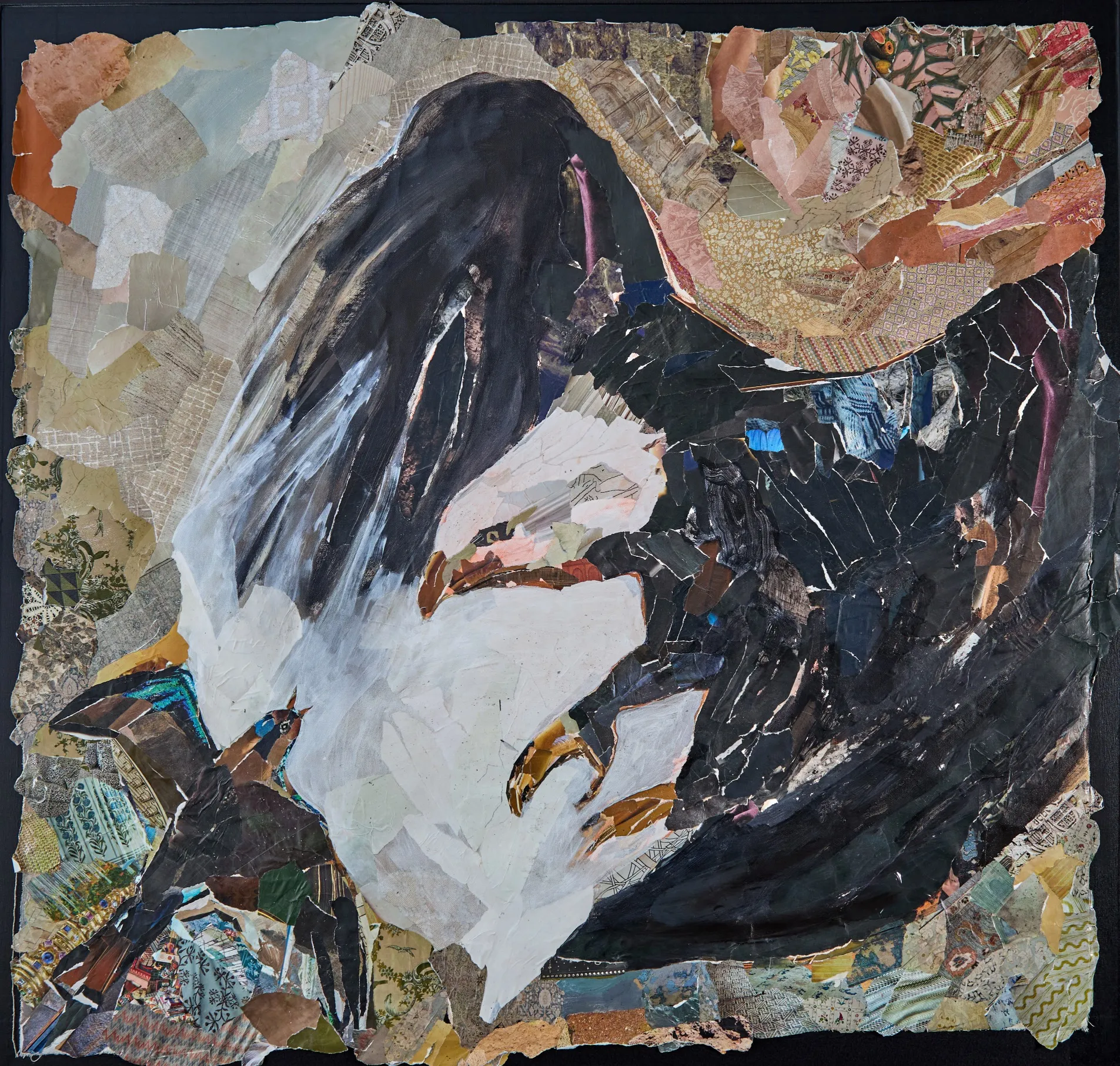
At the centre of the composition, a partially obscured figure emerges and dissolves simultaneously, suggesting both vulnerability and resistance. Dark painterly forms press against pale, unfinished surfaces, while decorative fabrics and domestic textures become entangled with ruptured black passages that evoke destruction, smoke, and displacement. The collision between intimacy and catastrophe reflects the disorienting experience of witnessing war unfold across a shared cultural and historical geography.
"I HAVE A LOVE-HATE RELATIONSHIP WITH MY WORK.
STRIVING FOR PERFECTION, I GIVE IT MY ALL. THEN
I WANT TO THROW IT TO THE FEET OF THE FIRE."
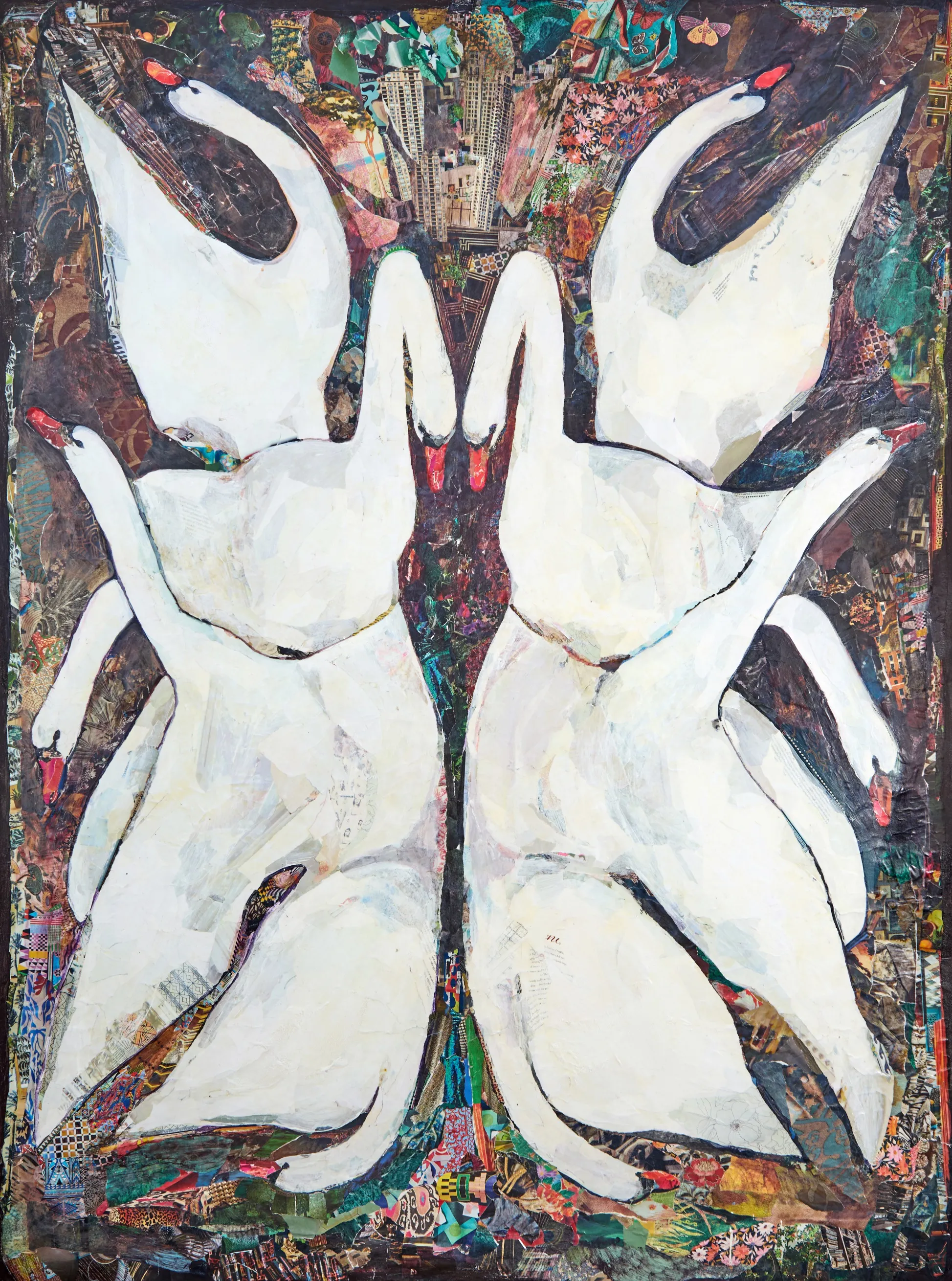
Swan Lake (2023–2024) borrows its title from Pyotr Tchaikovsky’s ballet, which Soviet television famously broadcast on repeat during moments of political collapse and transition — including the period surrounding the announcement of Stalin’s death, when official silence preceded public acknowledgement. In this work, the ballet becomes both historical echo and psychological metaphor: a choreography of symmetry, doubling, concealment, and power.
The large-scale composition is structured around mirrored white swans emerging from an intricate field of collage. Their bodies appear almost identical yet subtly altered, invoking the idea of chirality — forms that resemble one another but cannot be perfectly superimposed, like left and right hands. Through this principle, the work reflects on repetition within history: political systems, cultural memory, and human behaviour reproducing themselves in altered but recognisable forms across generations.
The swans function simultaneously as emblems of grace, myth, propaganda, and collective performance. Their theatrical whiteness stands in tension with the densely layered background of urban fragments, textiles, decorative patterns, and architectural imagery, where beauty and instability coexist. The symmetrical arrangement suggests ritual, state spectacle, or ceremonial order, yet the surface itself remains fractured and unstable, resisting total coherence.
As throughout the wider series, collage becomes a method for thinking through historical rupture and emotional contradiction. Torn materials accumulate like sedimented memory, carrying traces of private life alongside collective trauma. Swan Lake explores how power aestheticises itself, how repetition shapes consciousness, and how fragile differences persist inside structures that attempt to impose sameness.
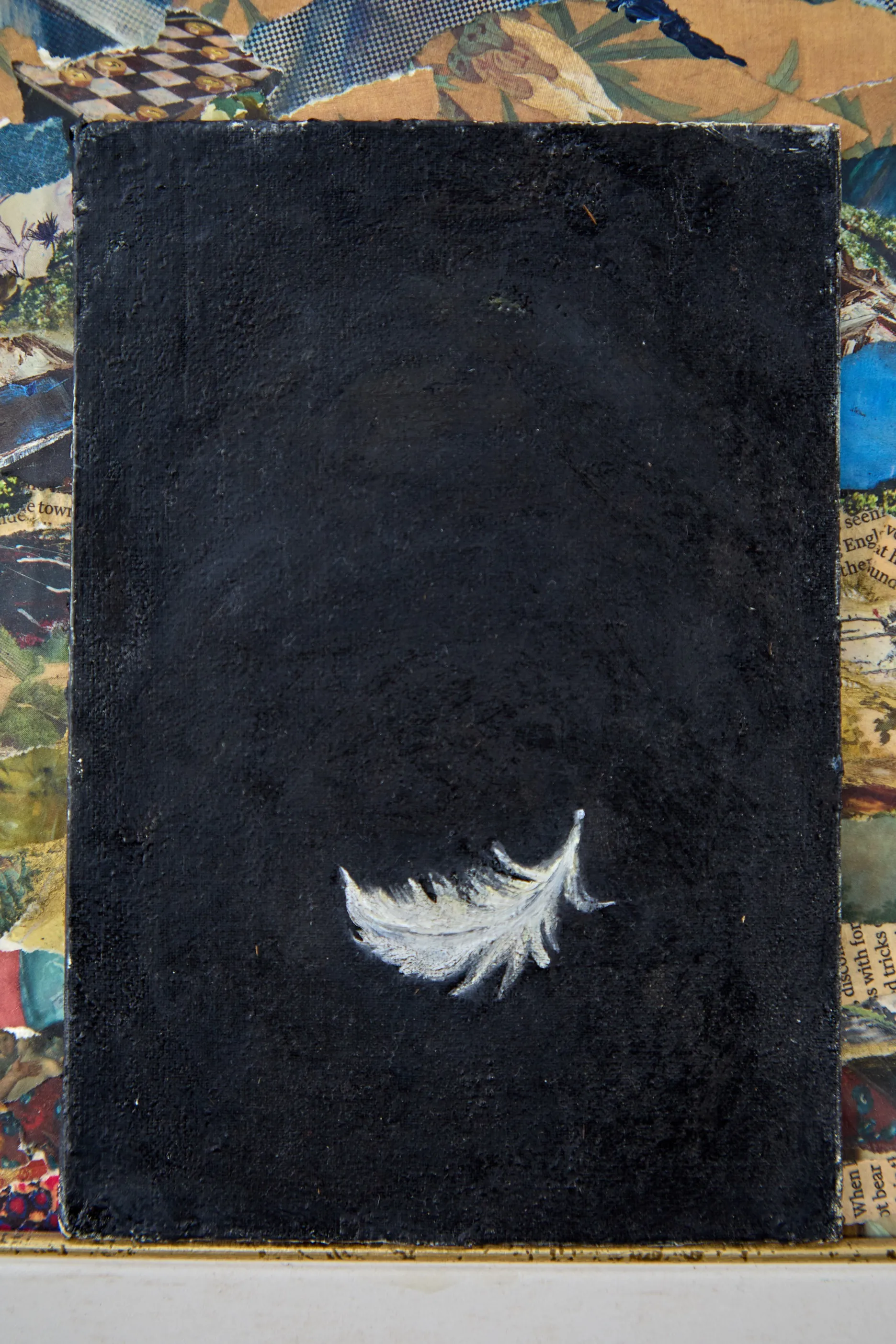
Feather (2026) is among the most recent works in the series and accompanies the lines: “so perfect and light / so incomplete.” Reduced to a near-minimal image, the painting isolates a single white feather suspended within a dark field, creating a space of stillness, fragility, and unresolved presence.
In contrast to the density and fragmentation of earlier collage works, Feather approaches absence through restraint. The black surface functions less as background than as atmosphere — an uncertain expanse against which the feather appears momentary, vulnerable, almost vanishing. Painted with delicate attention to texture and weightlessness, the feather becomes both trace and remainder: something shed, carried away, or left behind.
The work reflects on incompleteness not as failure, but as a condition of being. Lightness here coexists with loss; beauty with transience. Stripped of narrative and excess, the image invites a contemplative encounter with impermanence, silence, and the fragile persistence of form.
Next project
All the words and faces I contain